
Harmaline-Induced Tremors for Preclinical Research

Services
Services
Harmaline-Induced Tremors
Essential Tremor (ET) is the most common movement disorder, characterized by involuntary, rhythmic shaking that primarily affects the hands and arms. It is a progressive neurological condition often linked to abnormal synchronization of brain activity, particularly in the cerebellum. The Harmaline-Induced Tremor model in mice is a widely utilized pharmacological assay for studying the neurobiological basis ET. Harmaline, an alkaloid, acts primarily by increasing the synchronous firing of neurons in the Inferior Olivary nucleus, which then projects to the cerebellum. This synchronized output drives the rhythmic activity characteristic of tremor. Because the frequency of the induced tremor (typically 8–12 Hz) closely matches the physiological tremor frequency seen in human ET patients, this model is highly valuable for screening compounds that modulate cerebellar circuits and for characterizing novel anti-tremor drugs.
Services
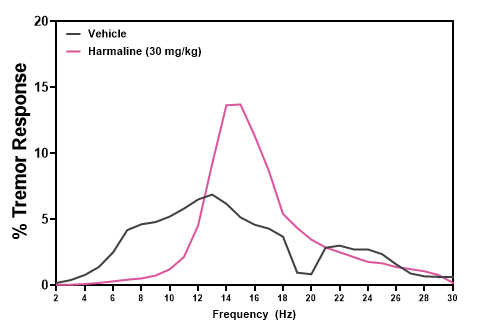
Frequency distribution plot showing the percentage of tremor activity recorded at each frequency. A center frequency of activity of 15 Hz and a bandwidth of 10 Hz are used to tabulate tremor events

Acute injection of harmaline increases tremor events in a dose-dependent manner in CD1 mice.
Services
Services
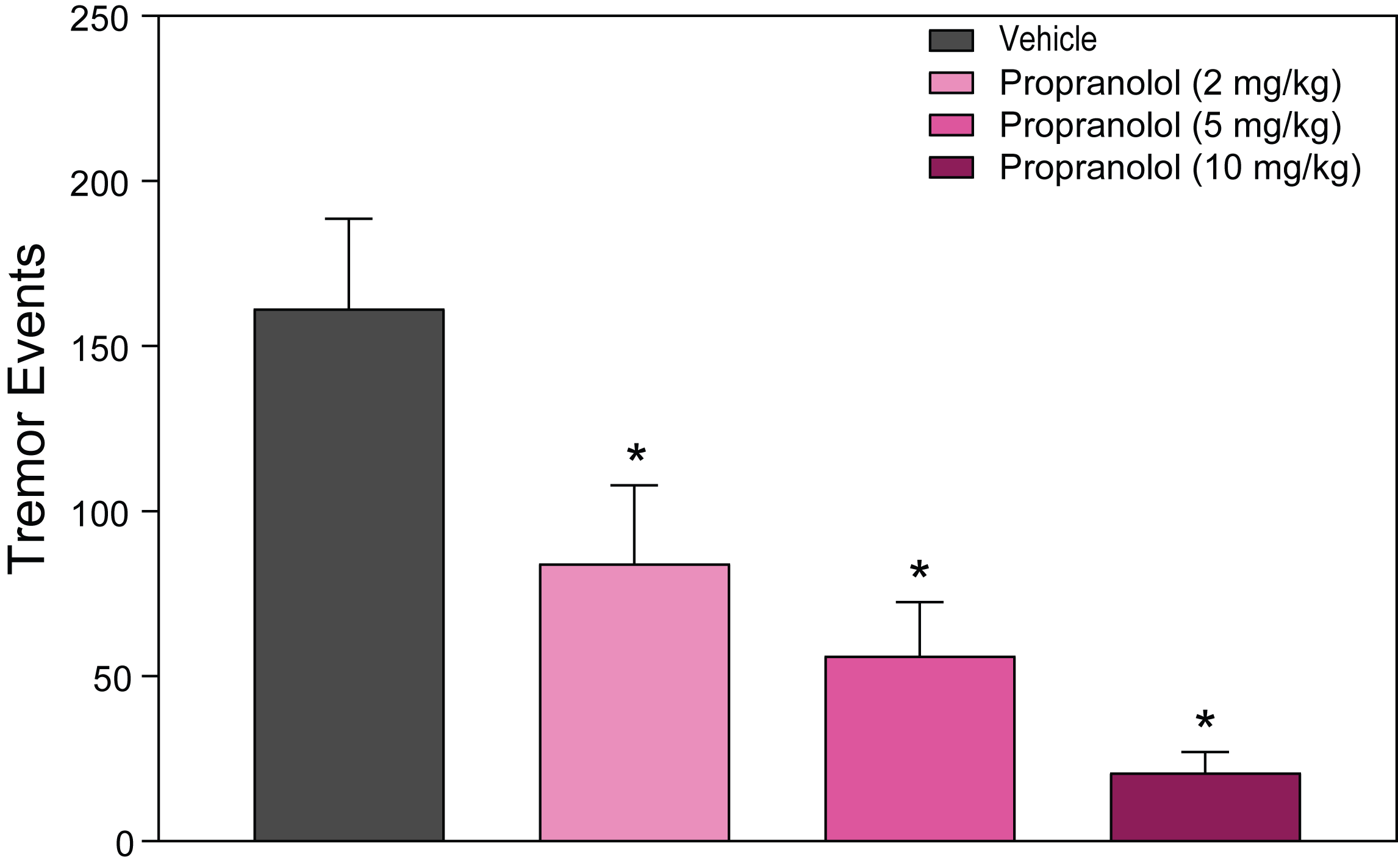
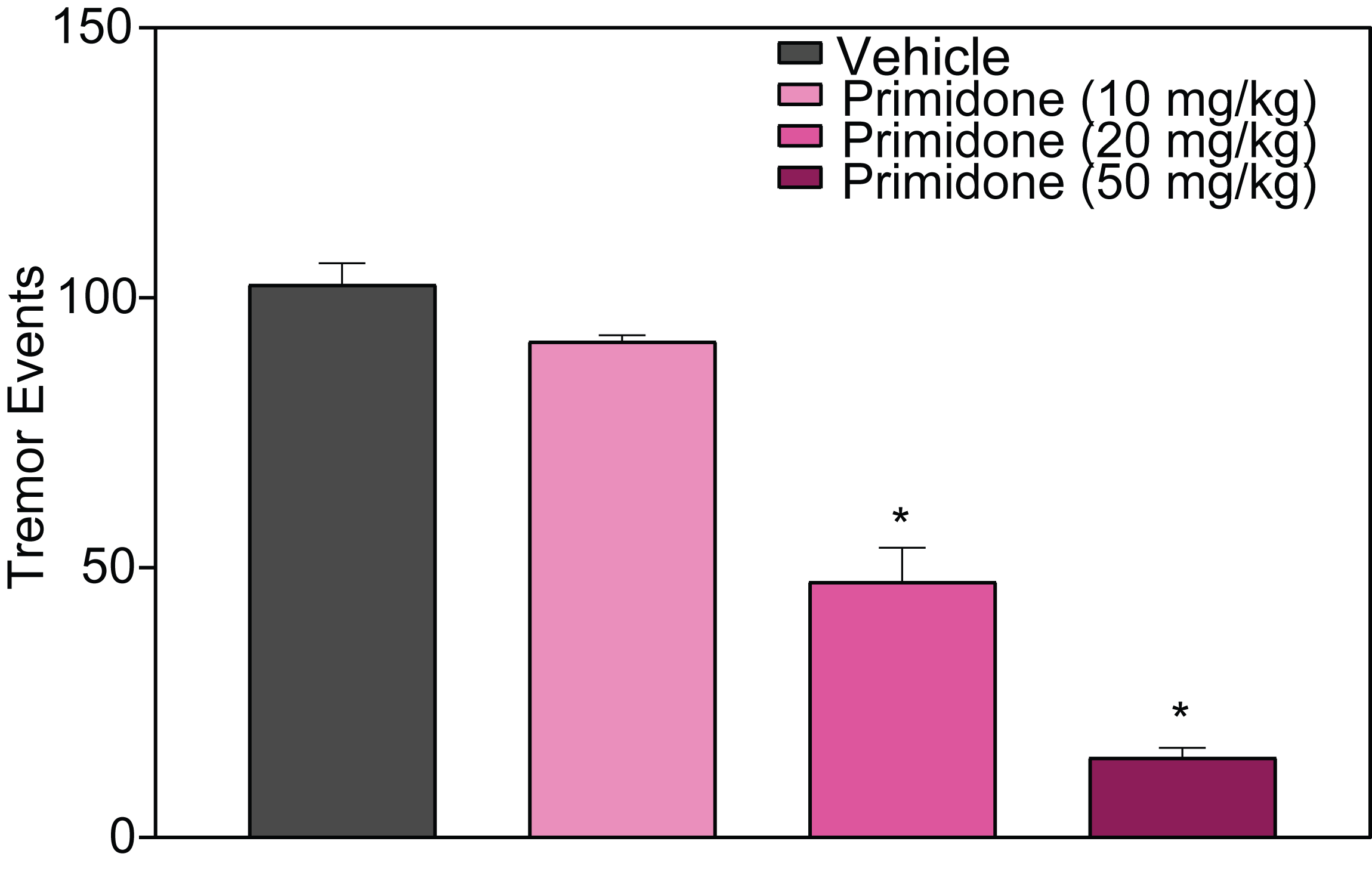
Acute injection of either propranolol or primidone results in a dose-dependent attenuation of harmaline-induced tremor in mice.