

Services
Services
The Shank3B-KO Mouse Model
About 2% of people with autism carry harmful mutations in SHANK3, a protein that helps organize the connections between neurons Developed by Guoping Feng, Shank3 –Feng mice harbor a deletion of exons 13-16 of the PDZ domains leading to the deletion of the Shank3α and Shank3β isoforms and partial deletion of Shank3γ. These mice exhibit some social, communicative, repetitive, and sensory processing abnormalities associated with autism spectrum disorder, as well as:
- Social deficits
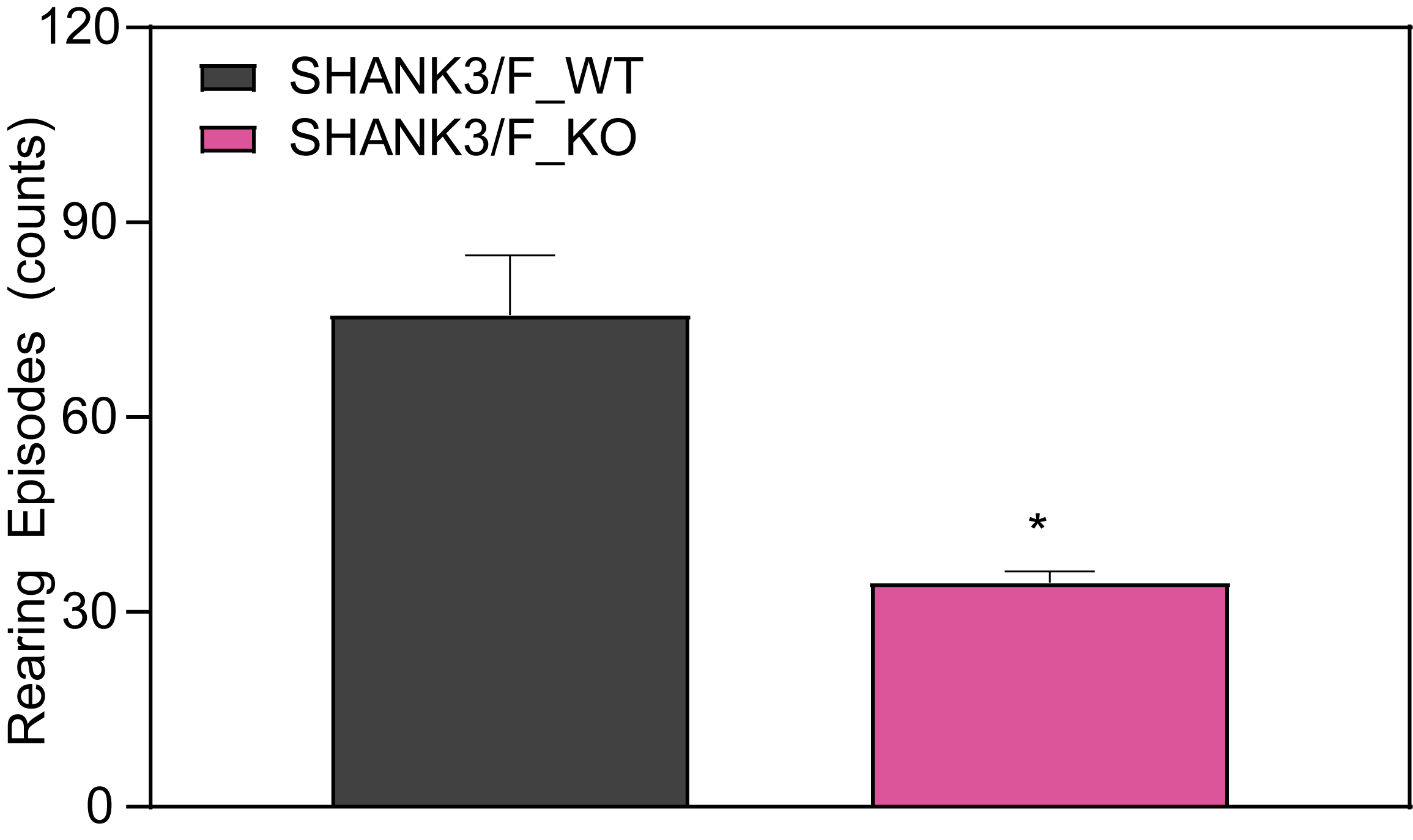
- Decreased activity and locomotion
- Altered gait patterns
- Anxiety-like behaviors
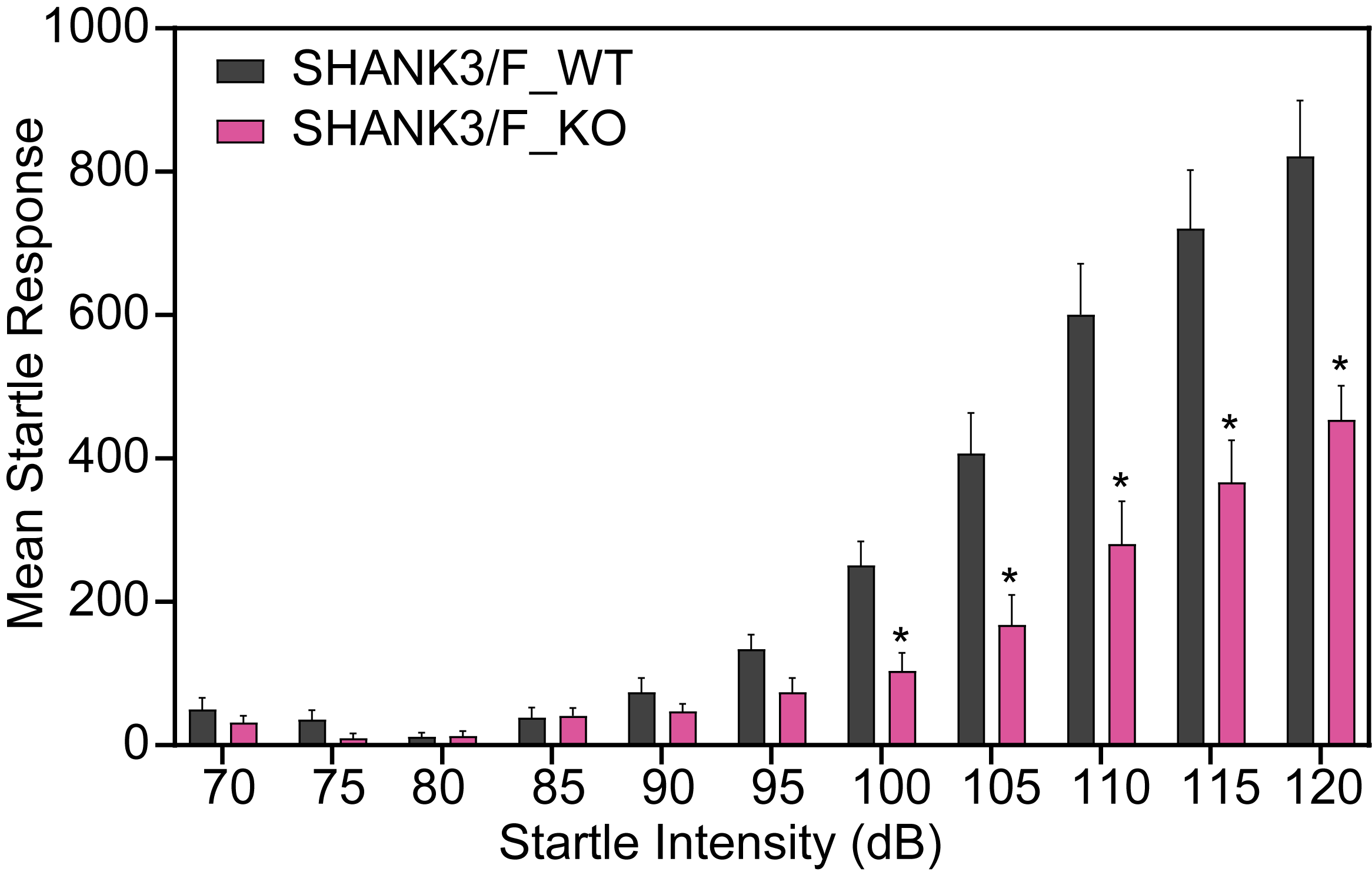
- Modified startle responses and increased pre-pulse inhibition
Results have been replicated across studies.
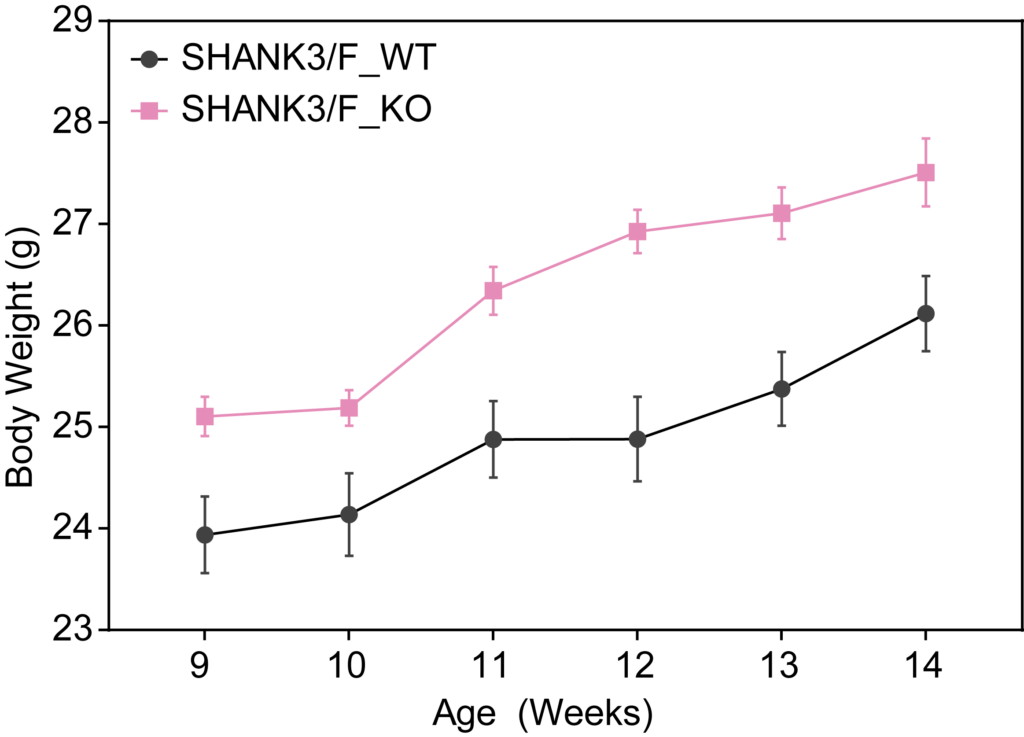
Body Weight
Shank3 KO mice weigh more than their WT counterparts.
Grooming
Startle Response
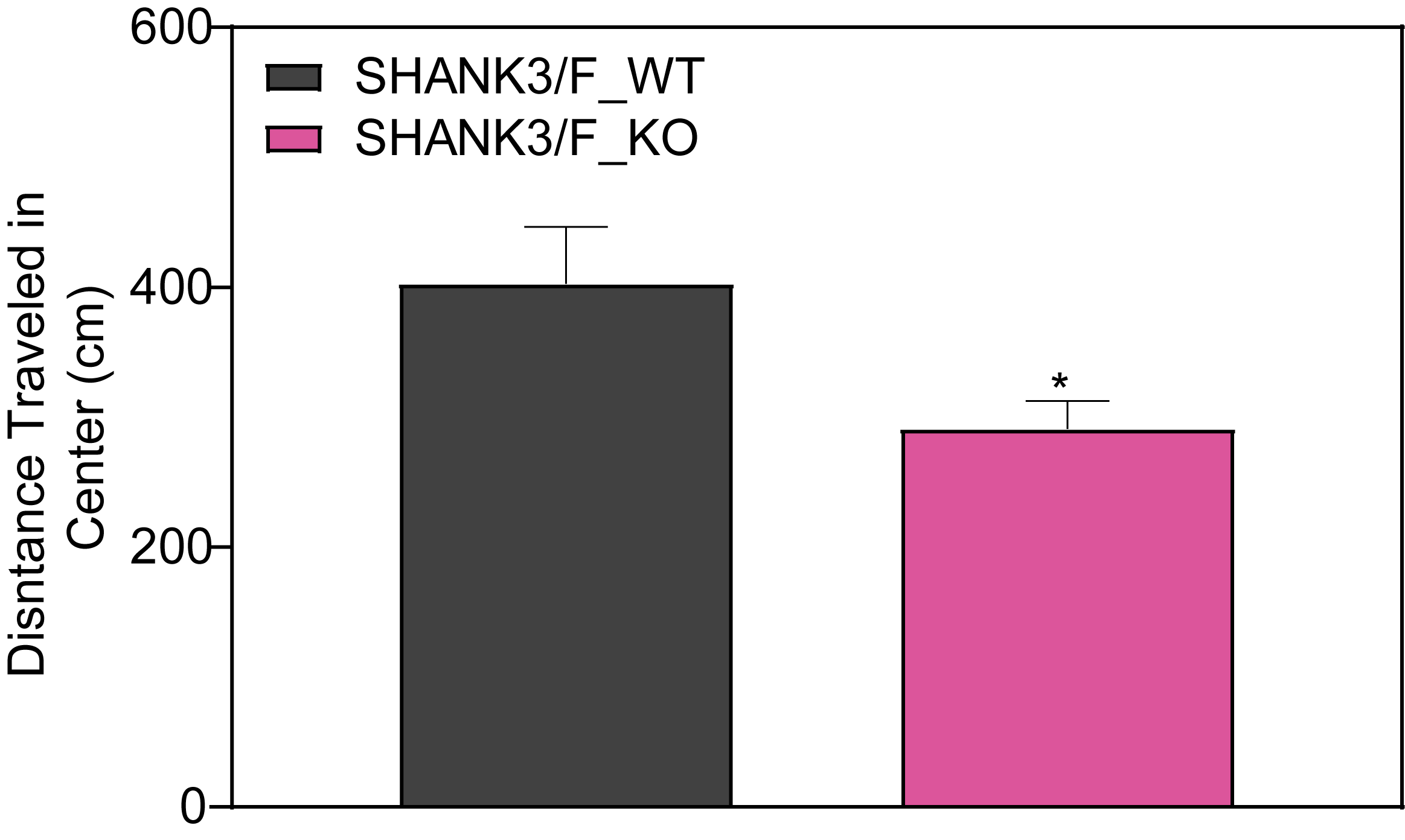
Urine Open Field
- Male KO mice are placed in an open field where they are presented with the urine of an estrus female placed in the center of the open field chamber.
- Locomotor activity is recorded automatically to determine social function
Rotarod Performance
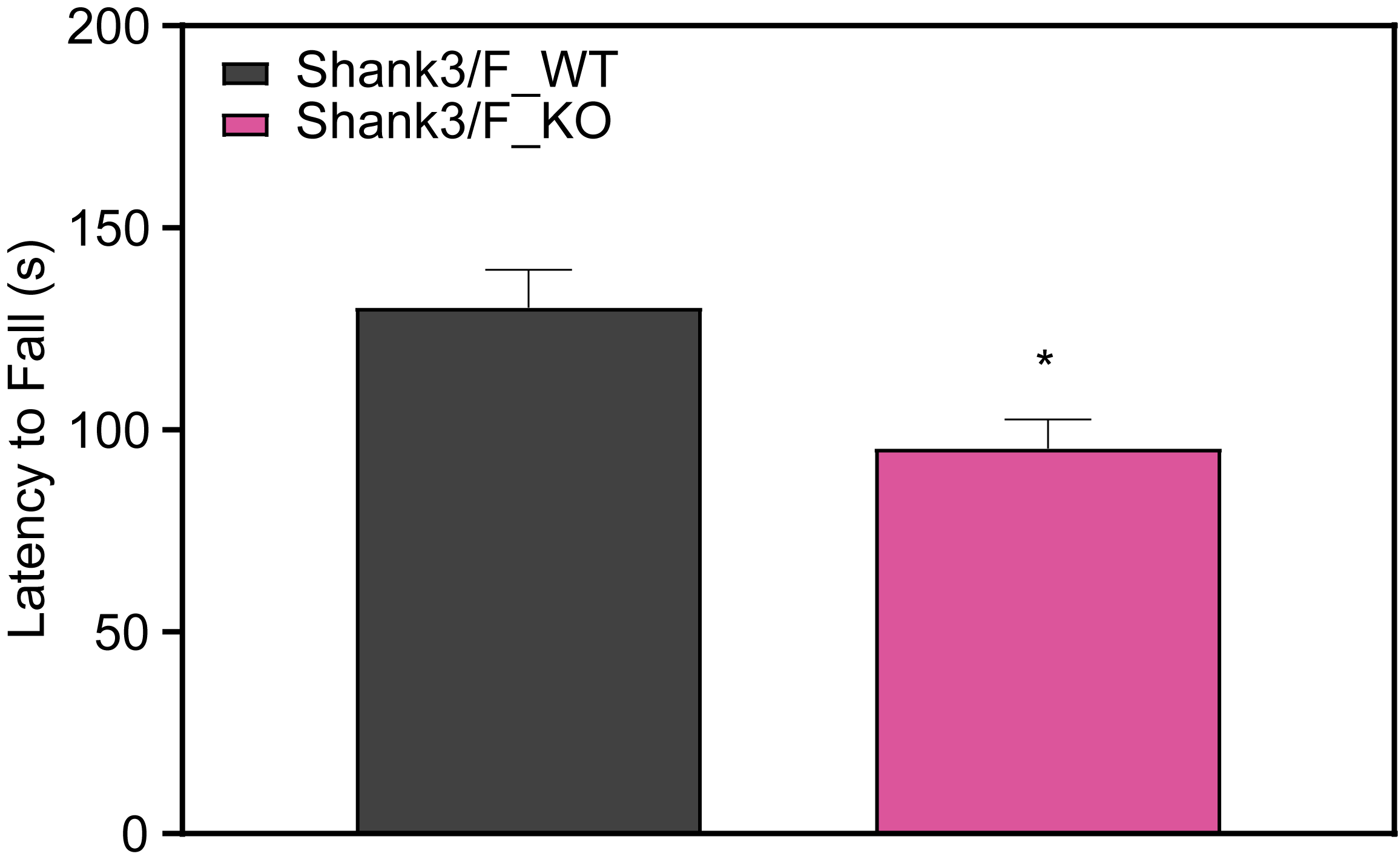
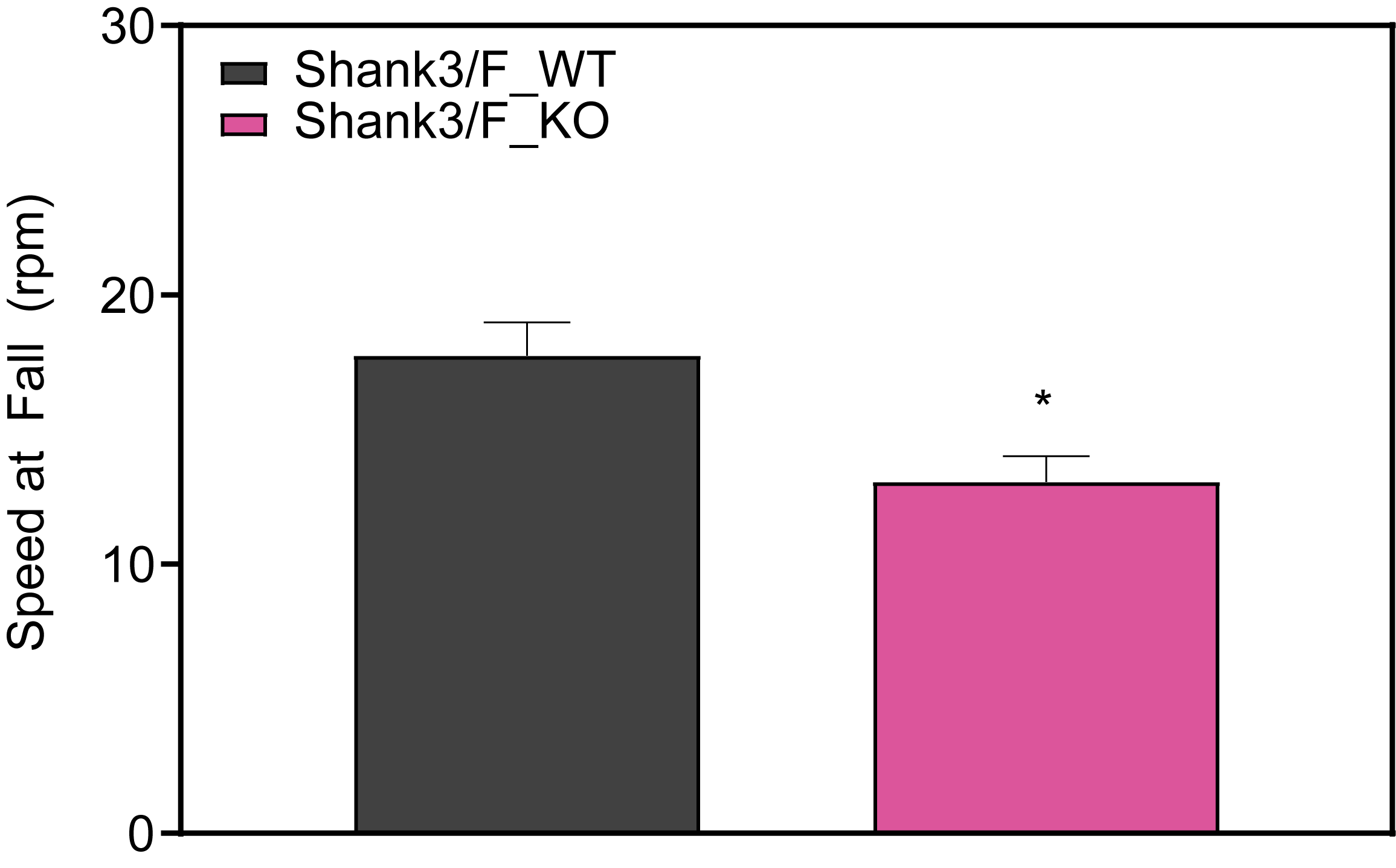
Rotarod Performance: Male Shank3 KO mice show some impairment on rotarod performance. They fall quicker from the rotating rod and at slower speeds.
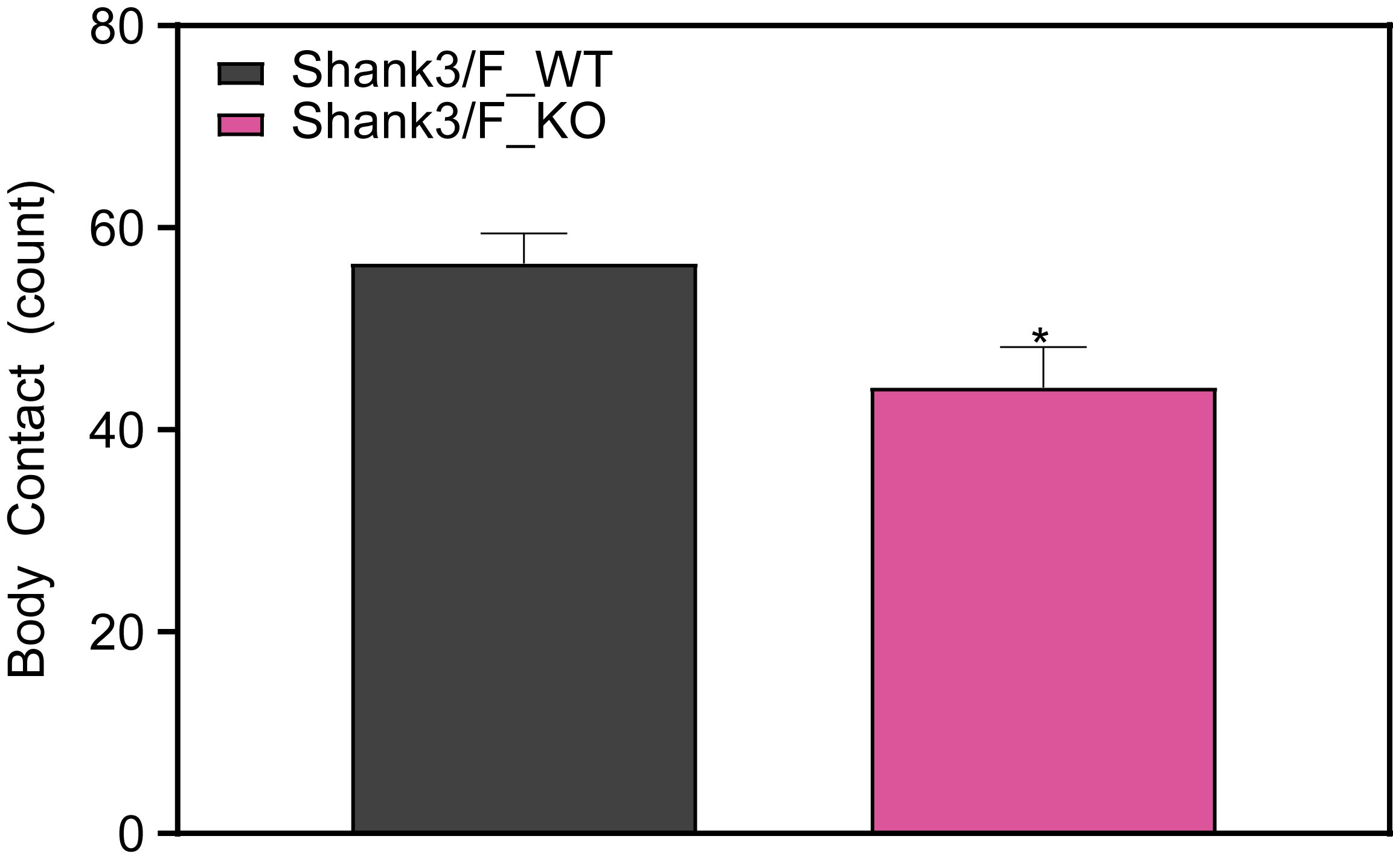
Social Interaction
- Same-genotype and age dyads are allowed to freely interact for 10 minutes
- Number of interactions (body contacts) are measured
Electrophysiology & Disease Markers
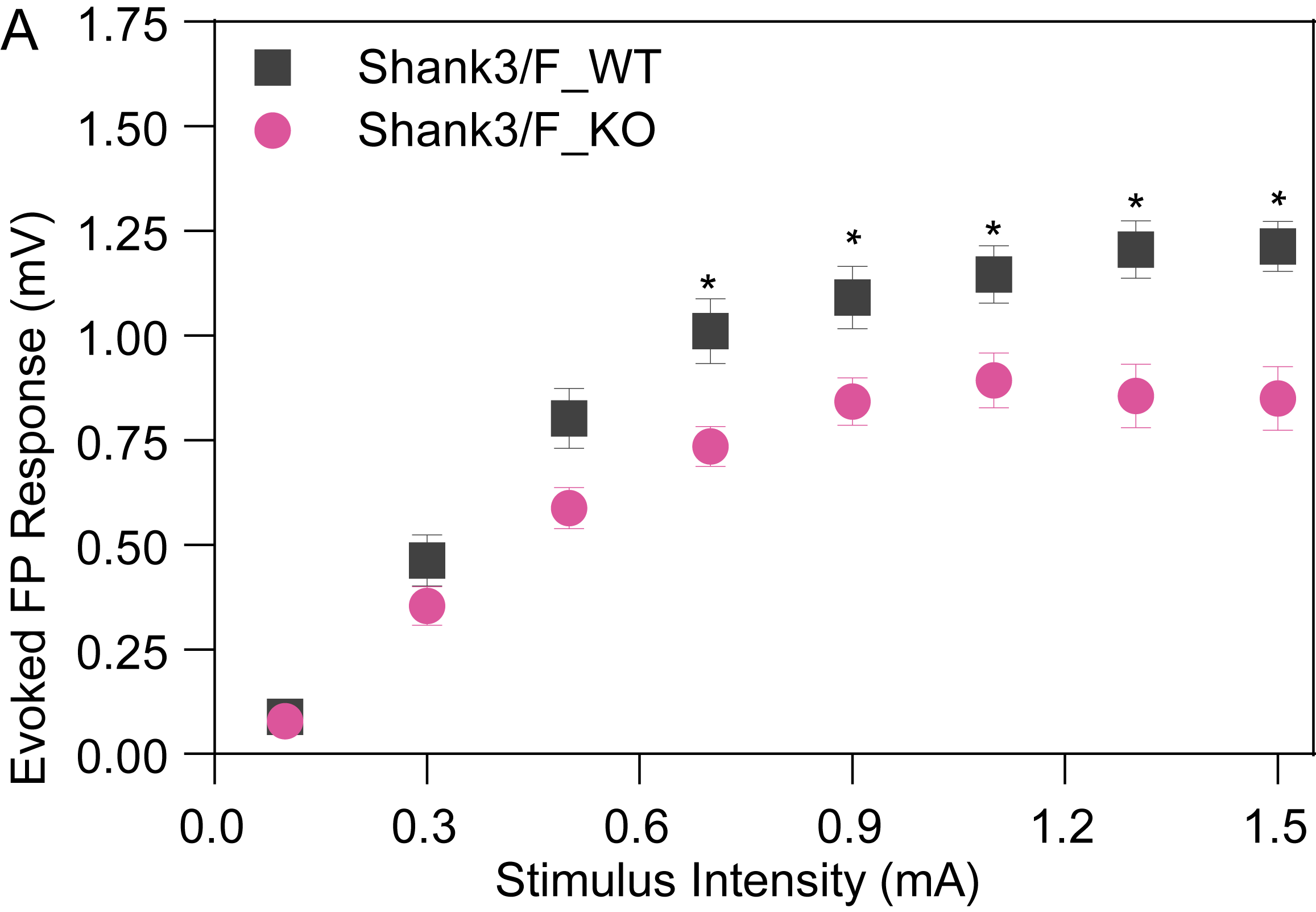
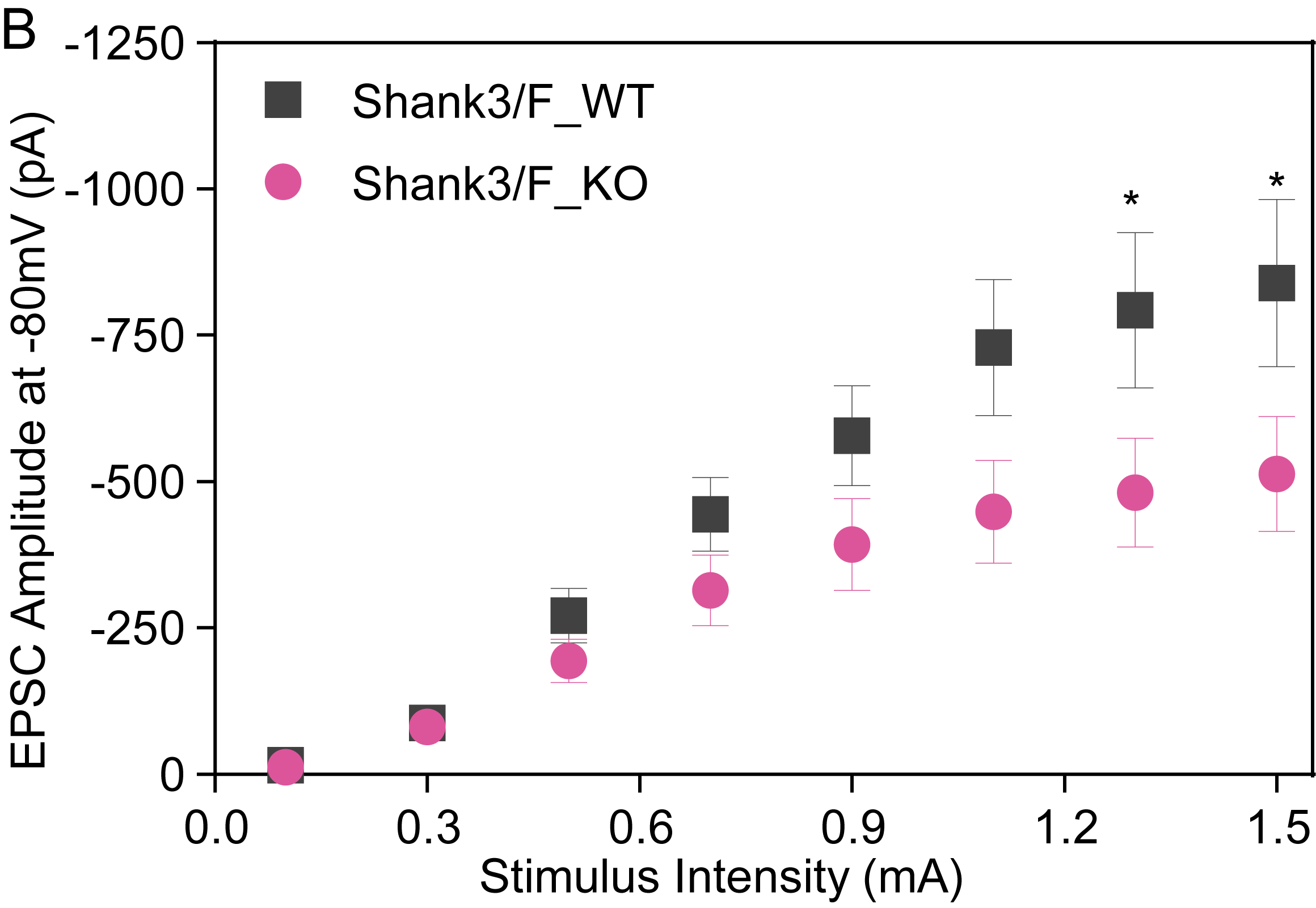
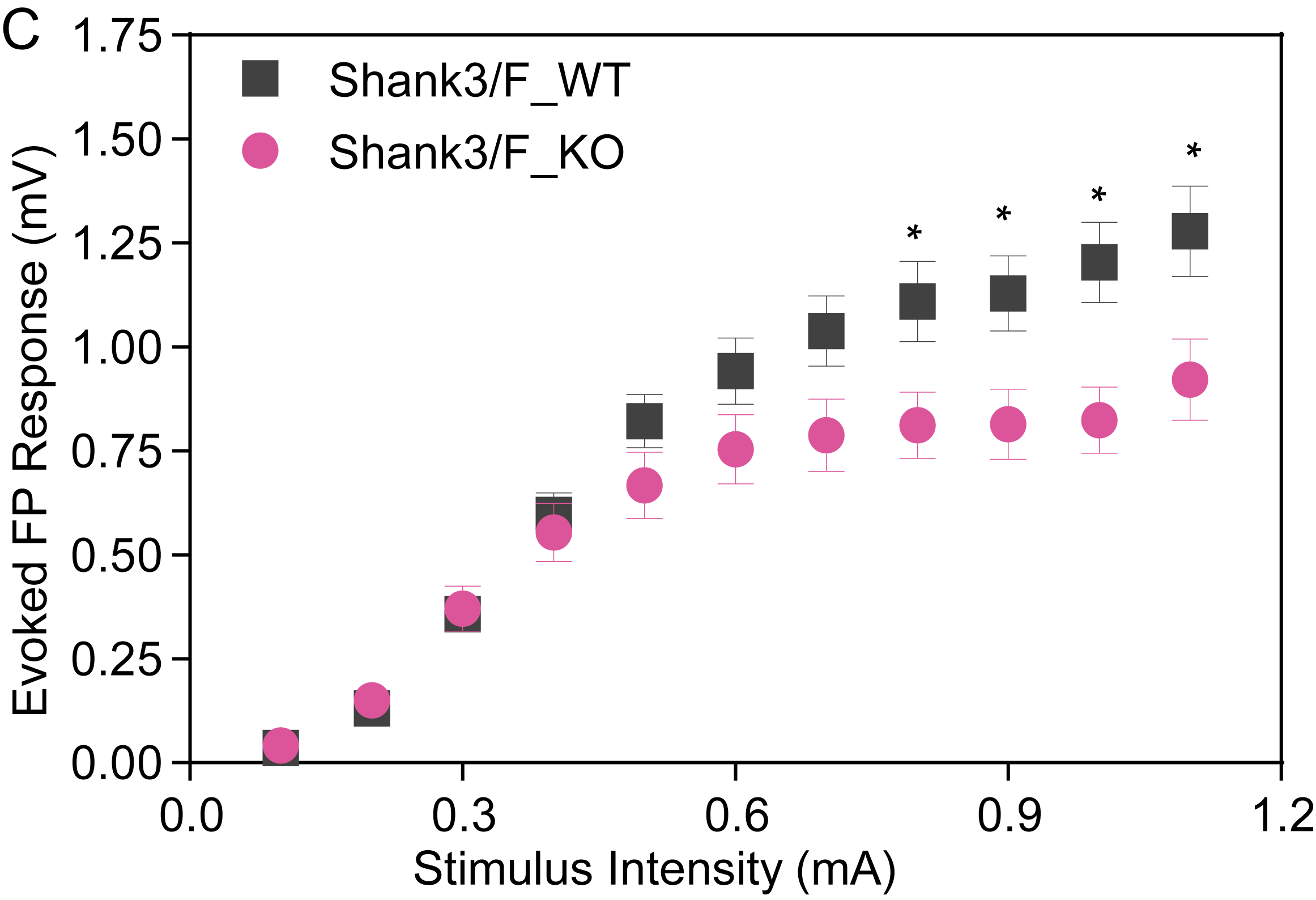
Synaptic Transmission
Synaptic Transmission in Striatum and NAc:
Cortical BDNF Isoforms and Striatal Synaptic Plasticity Marker
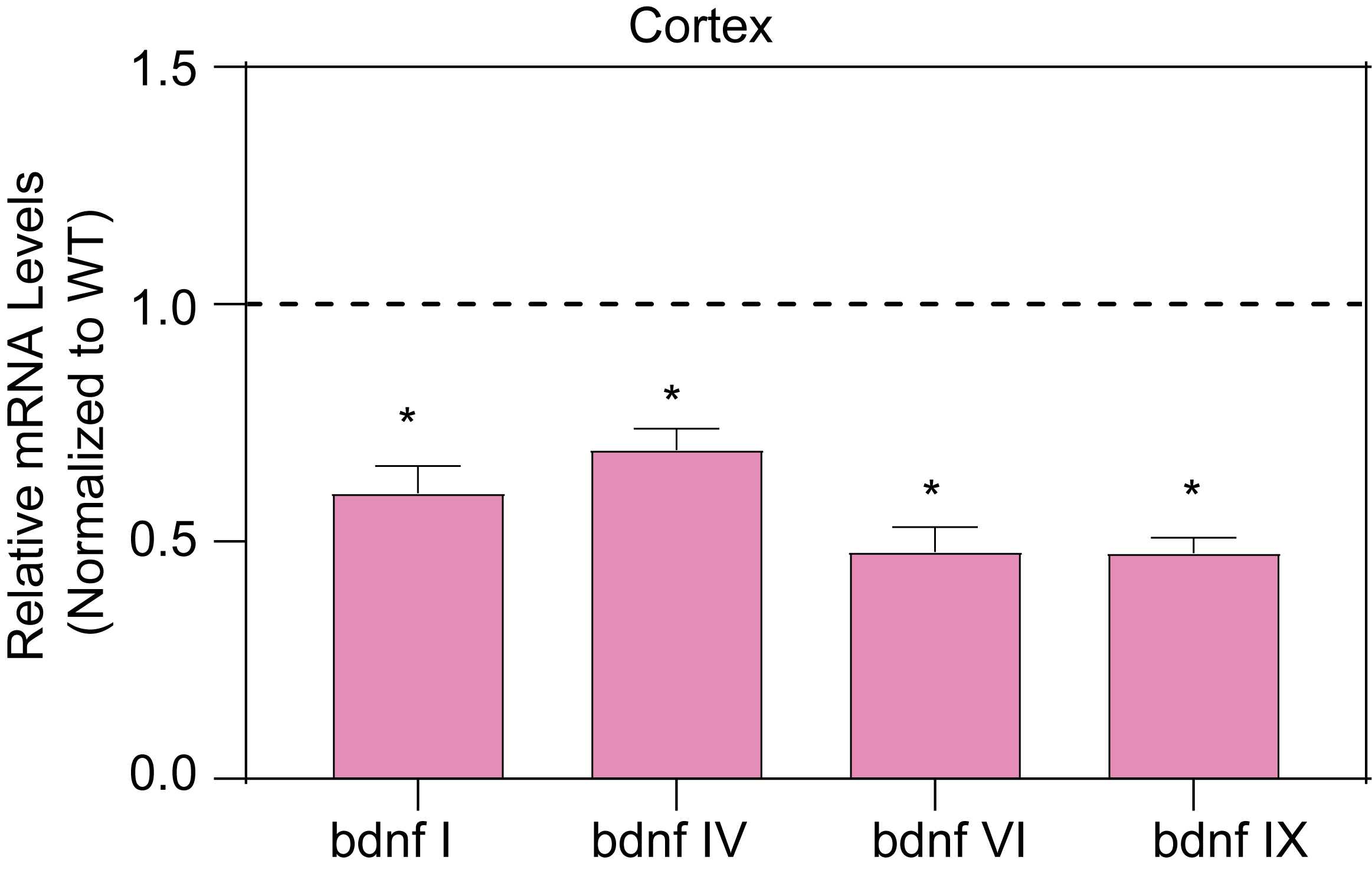
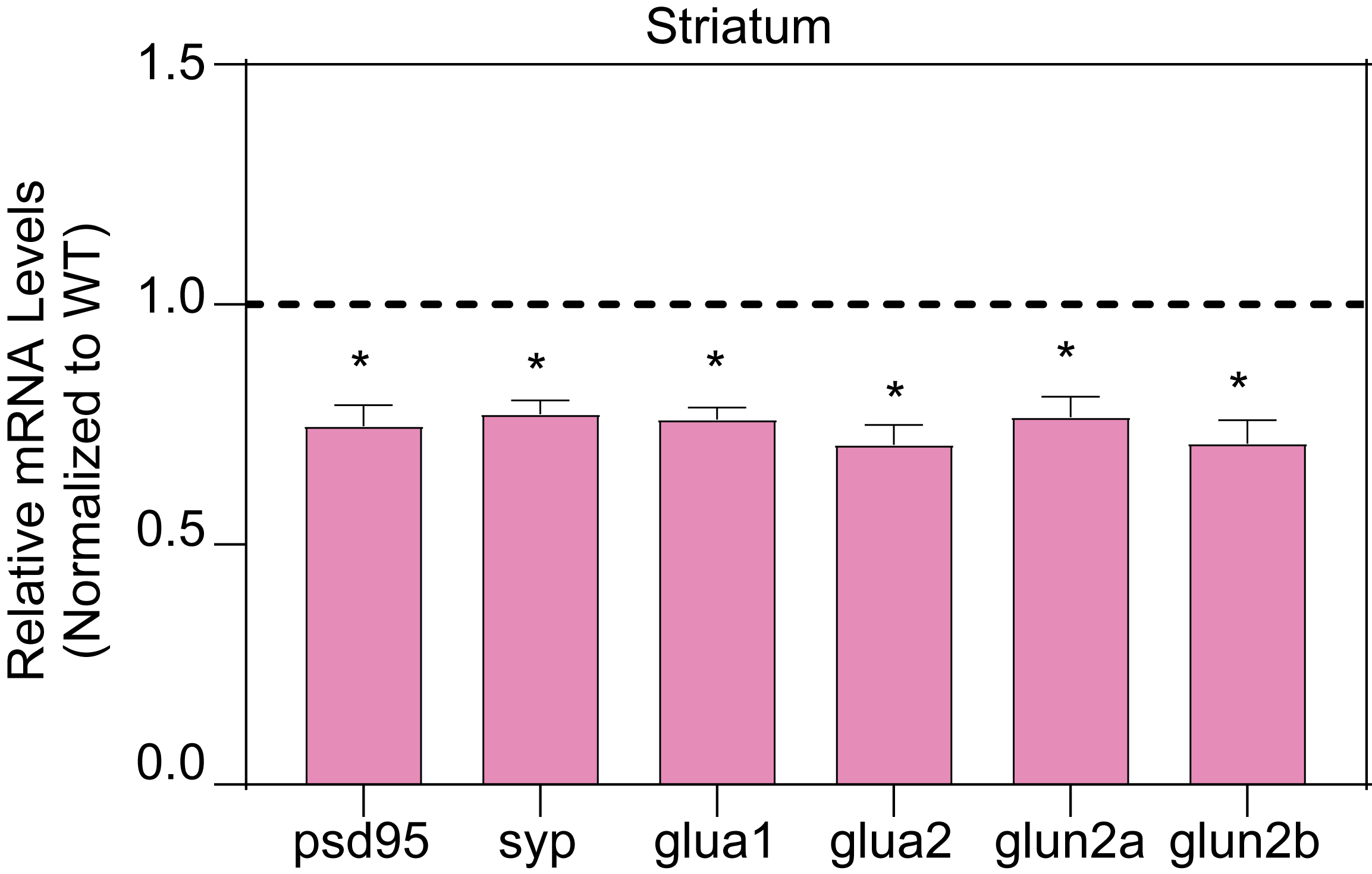
Quantitative PCR (qPCR) analysis of striatal and cortical tissues from shank 3 ko males at 15-17 wks of age. Relative level of target genes (psd95, syp, glur1, glur2, nr2a, nr2b, bdnf isoforms I, IV, VI, IX) were:
First normalized to the housekeeping gene gapdh and then normalized to the tissue-matched WT cohorts.