Services
Services
SOD1-G93A Mouse Model
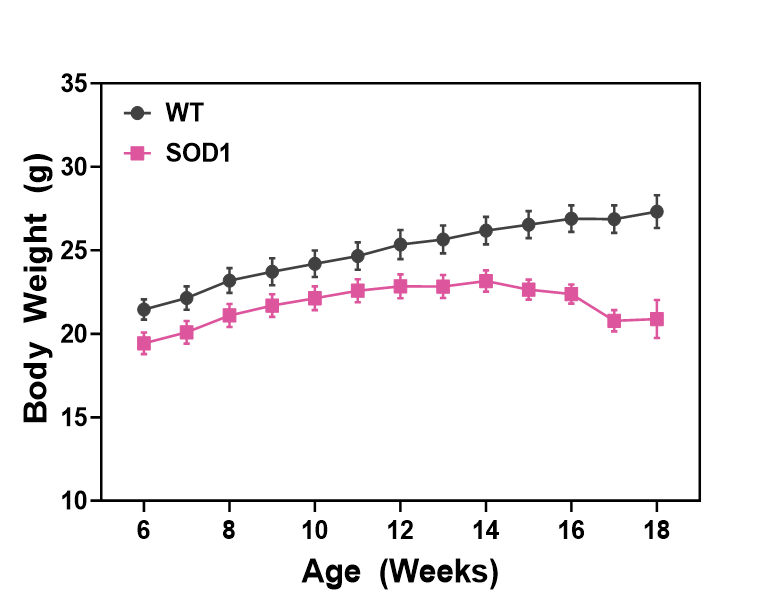
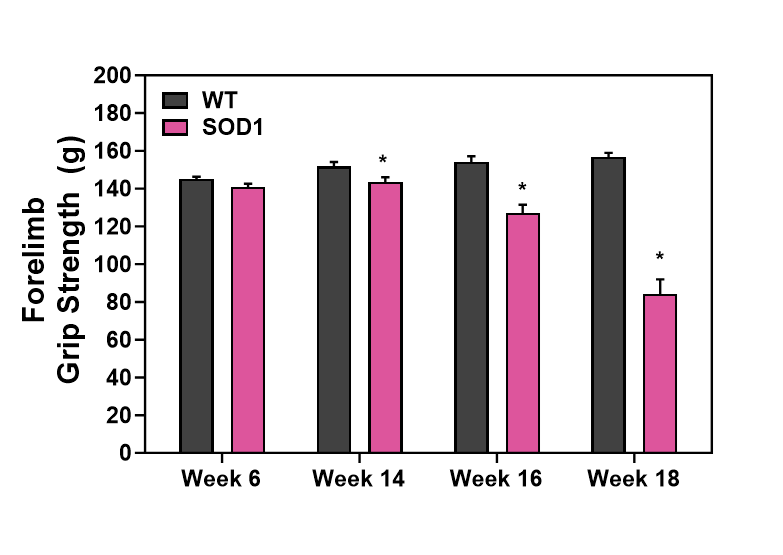
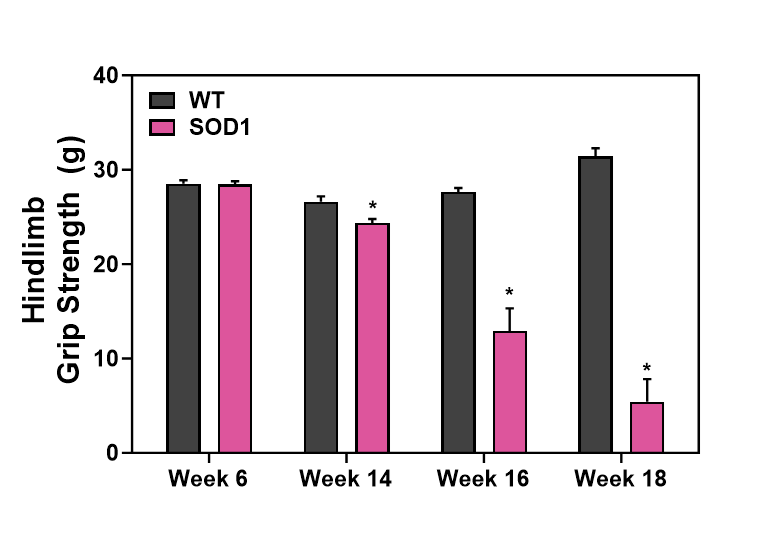
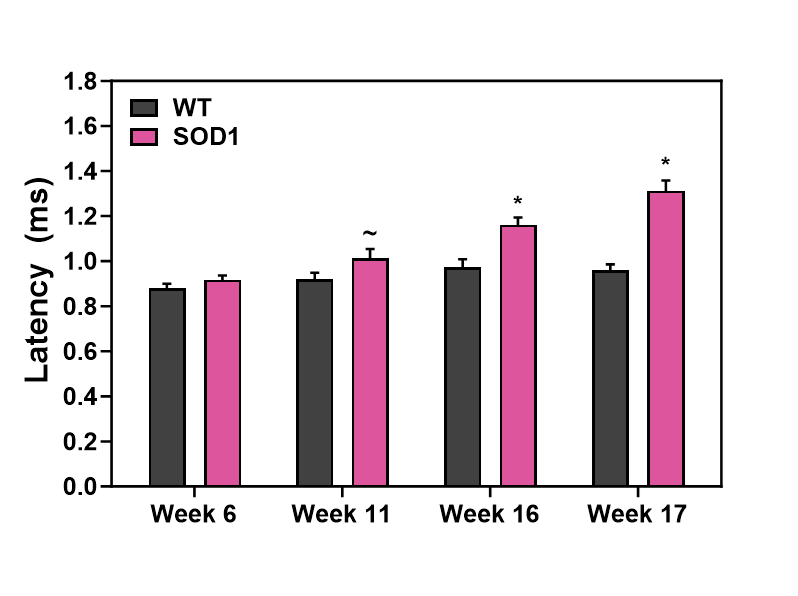
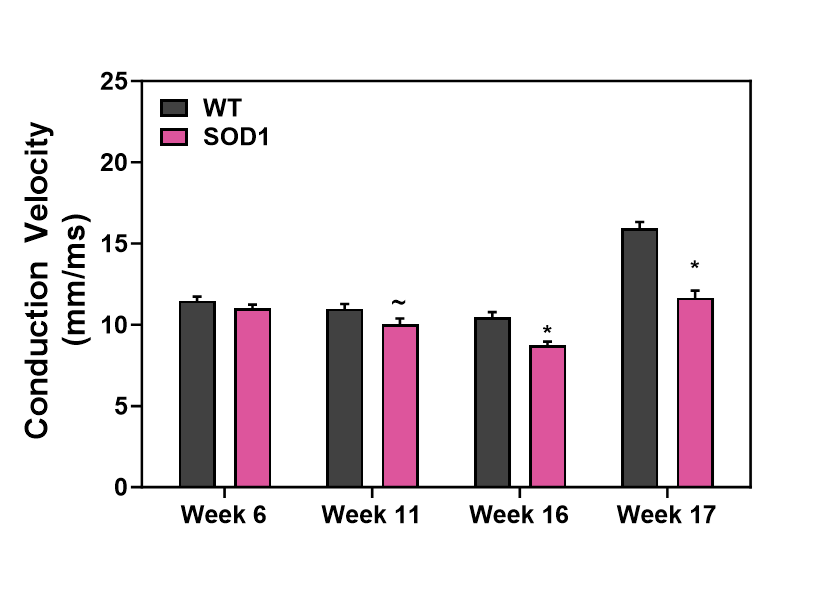
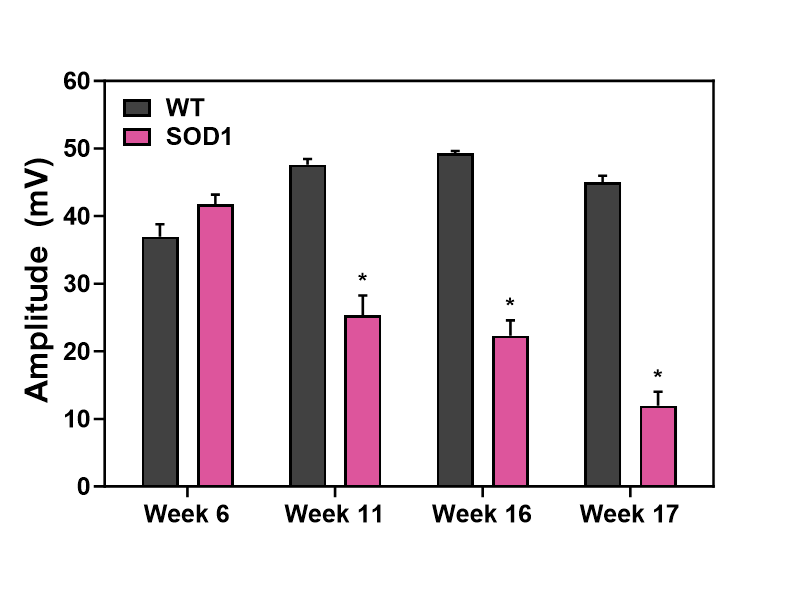
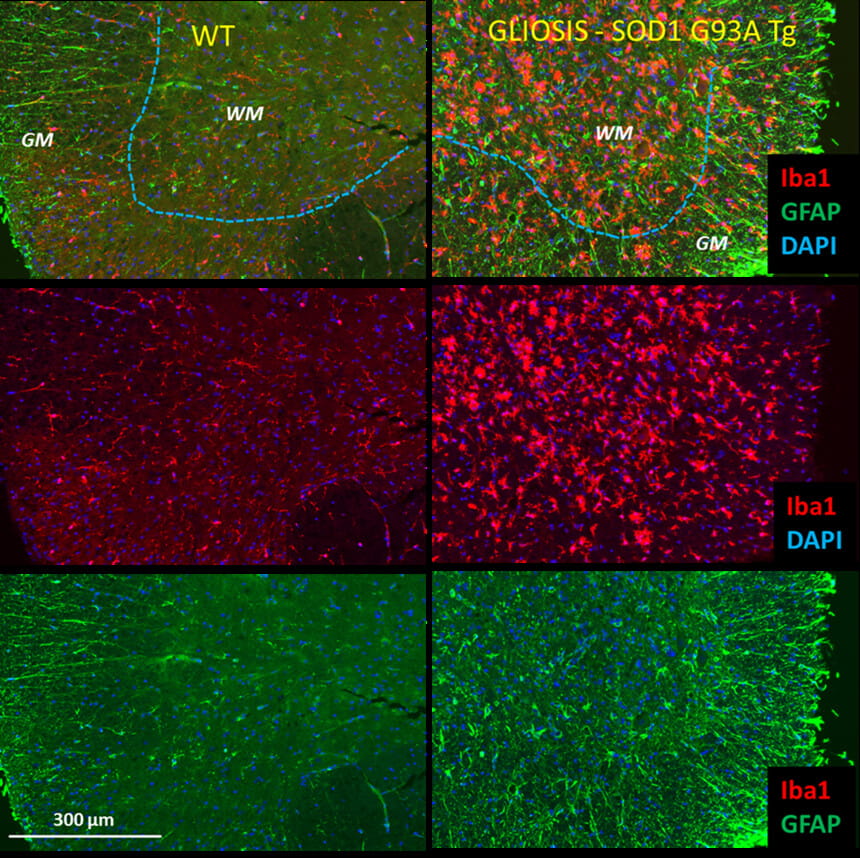
The SOD1 (G93A) mouse model is used to study Amyotrophic Lateral Sclerosis (ALS), a neurodegenerative disease affecting motor neurons. These mice overexpress a mutant human SOD1 gene, leading to a phenotype that mimics human ALS symptoms, including changes in body weight, declining grip strength, and reduced motor activity. This model has been crucial in advancing our understanding of ALS pathogenesis and in testing potential treatments.
TDP43 (ΔNLS8) Mouse Model
Multiple endpoints have been characterized in the model, including body weight, onset of tremor, clasping behavior, survival, compound muscle action potential (CMAP), gait analysis, and brain and CSF biomarkers (including inflammatory markers and NF-L).
Body Weight and Survival

Progressive weight loss in the ∆rNLS8 mice once Dox is removed.
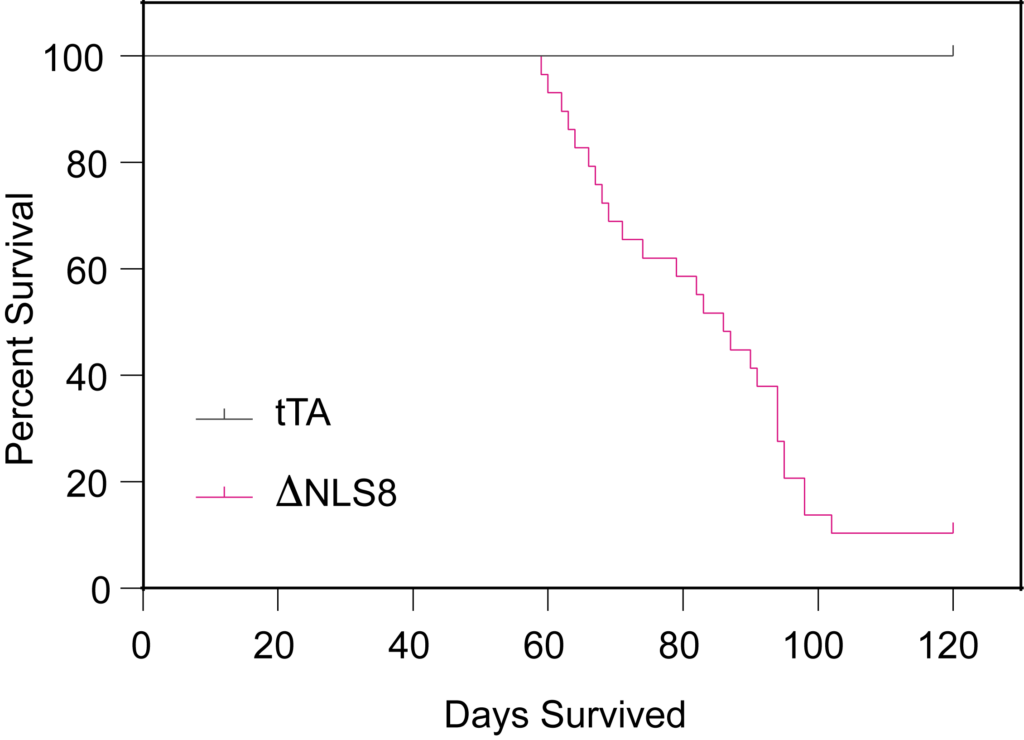
Survival is decreased in the ∆rNLS8 mice after DOX removal.
Tremor and Hindlimb Clasping
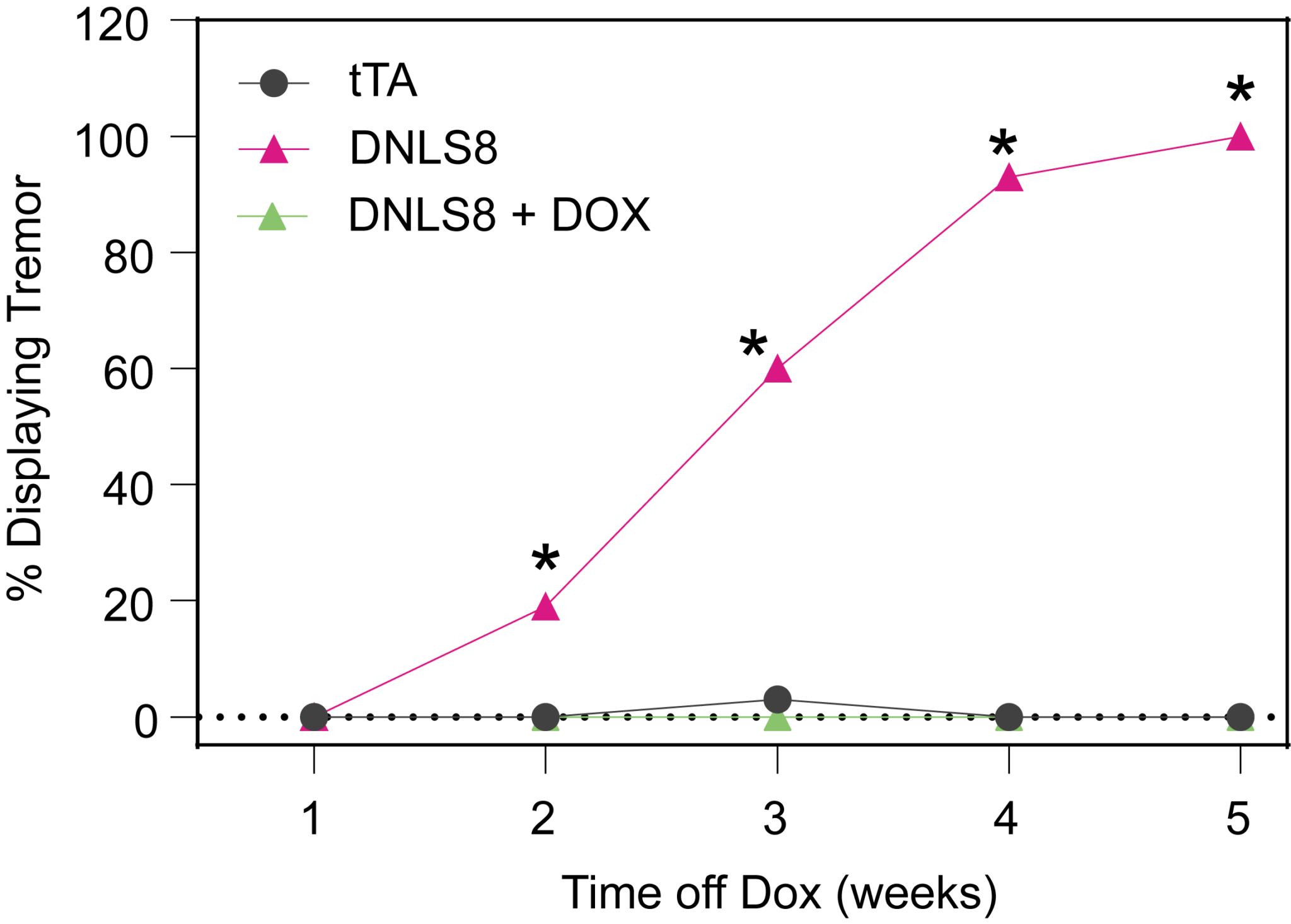
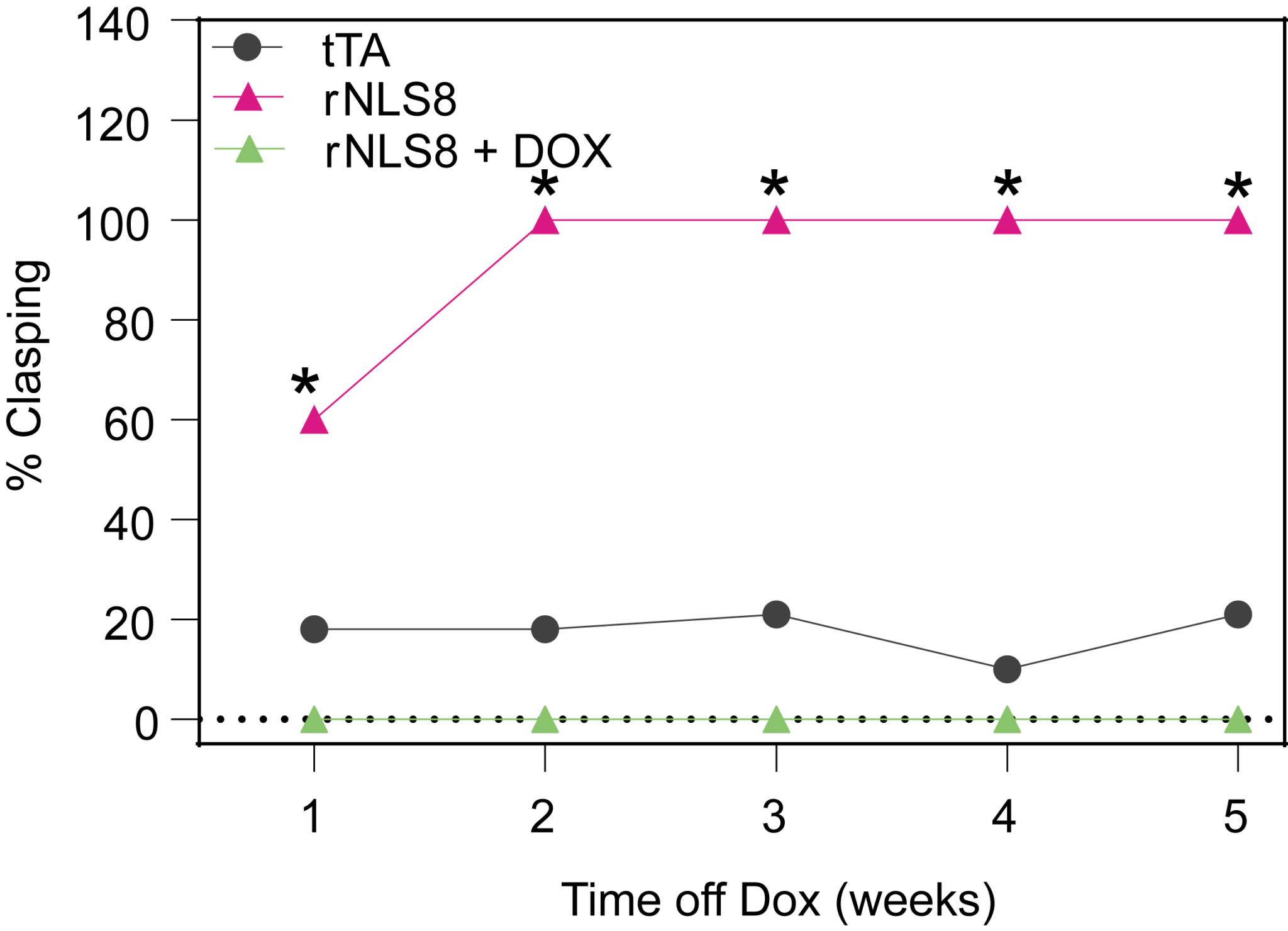
rNLS8 mice exhibit hindlimb clasping after DOX removal. This behavior is not observed in the presence of DOX.
Motor Deficits
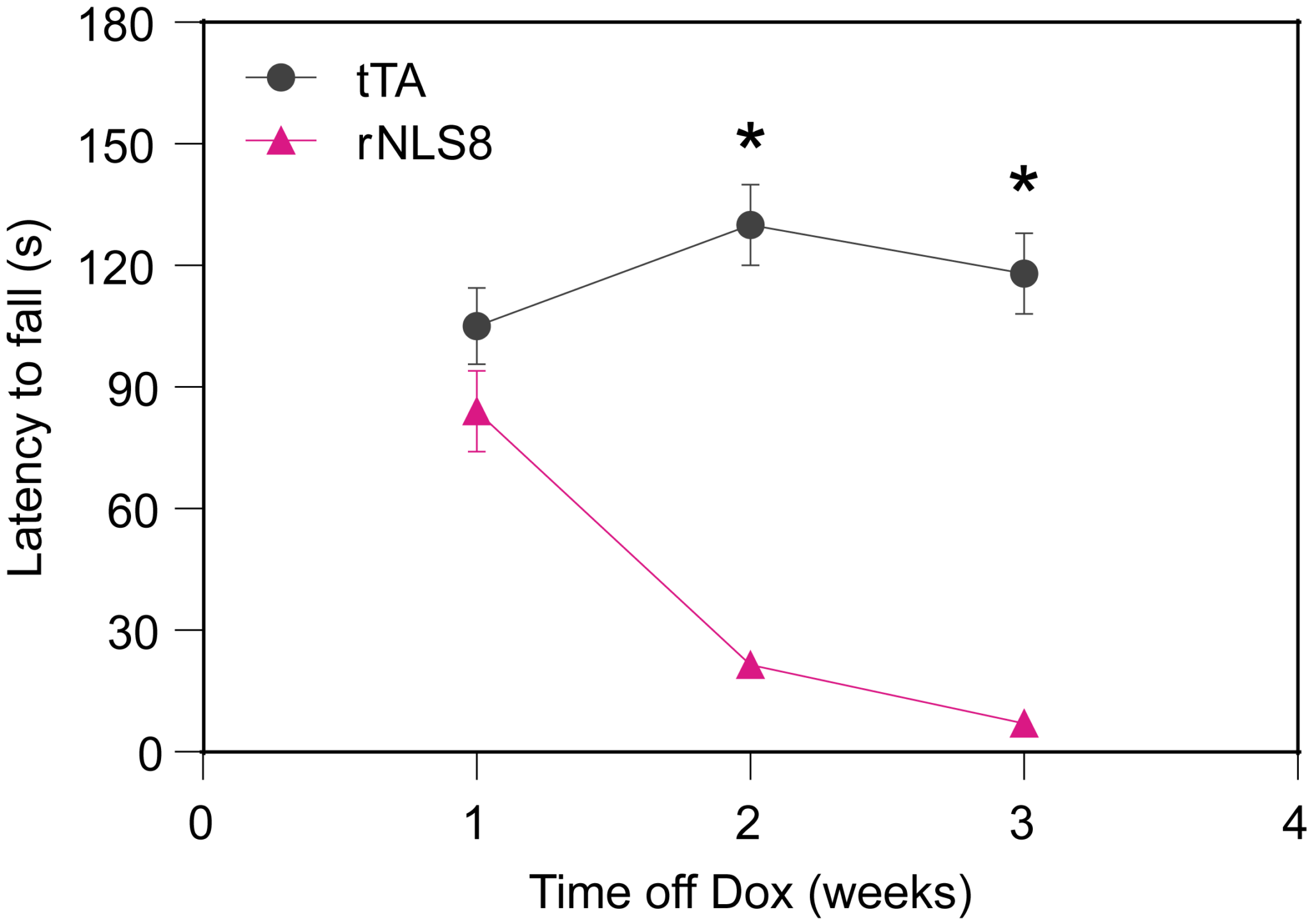
rNLS8 mice show progressive weakness in the wire hang test and fall quicker compared to the tTA mice. Deficits are seen within 2 weeks after DOX removal.
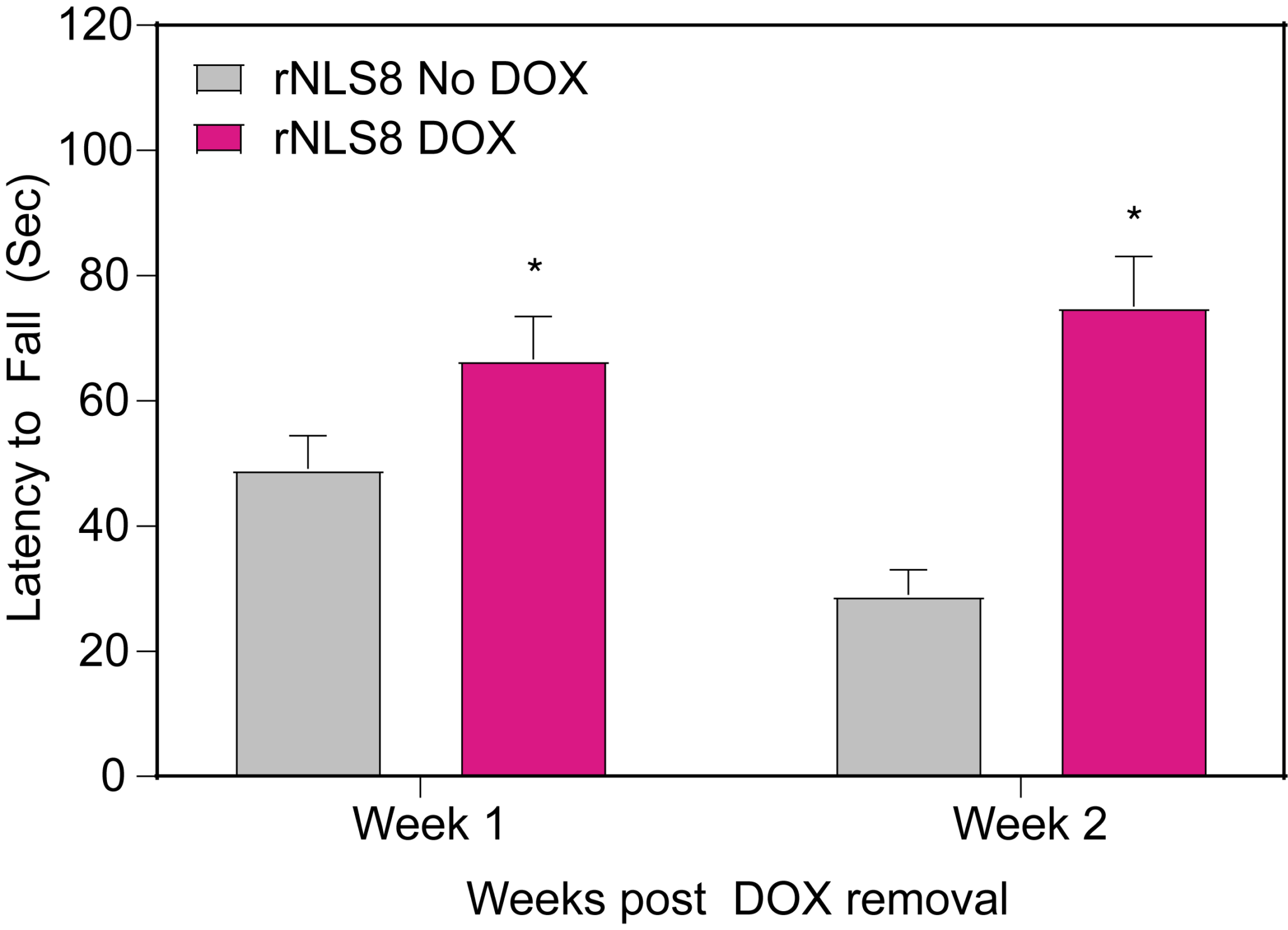
NLS8 mice fall quicker from a rotating rod compared to tTA mice. The deficits in rotarod performance is seen as early as 1 week post DOX removal.
CMAP
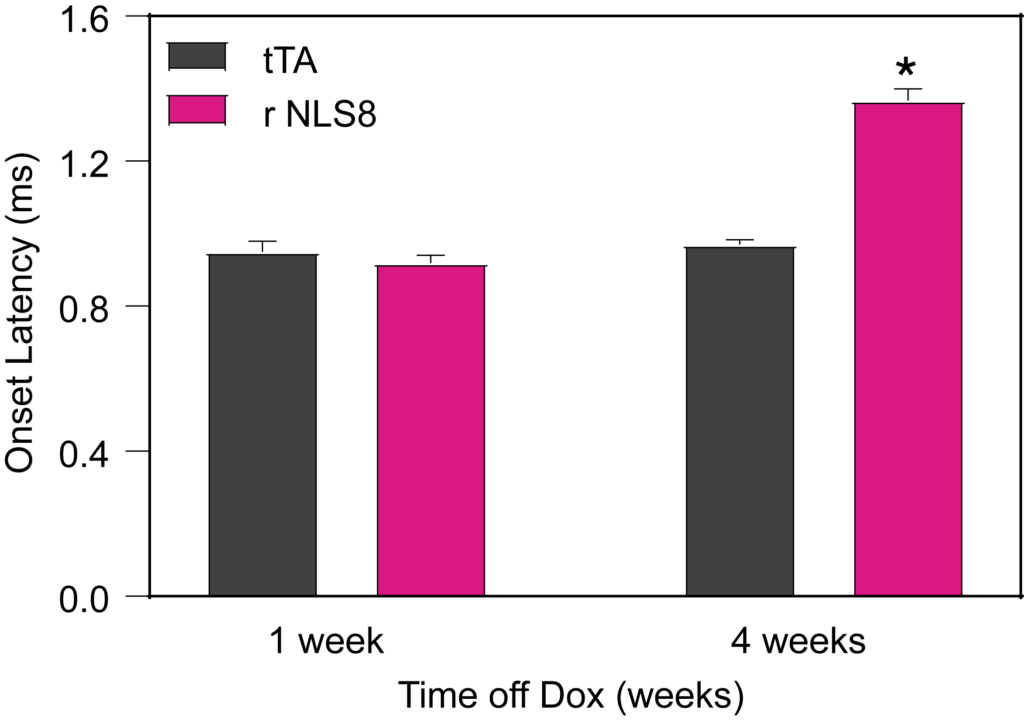
rNLS mice show an increase in the onset latency of muscle activation in response to motor nerve stimulation4 weeks post DOX removal.

rNLS mice show a decrease in response amplitude 4 weeks post DOX removal.

rNLS mice show a decrease in muscle nerve conduction 4 weeks post DOX removal.
Neurofilament Light Chain (NF-L)
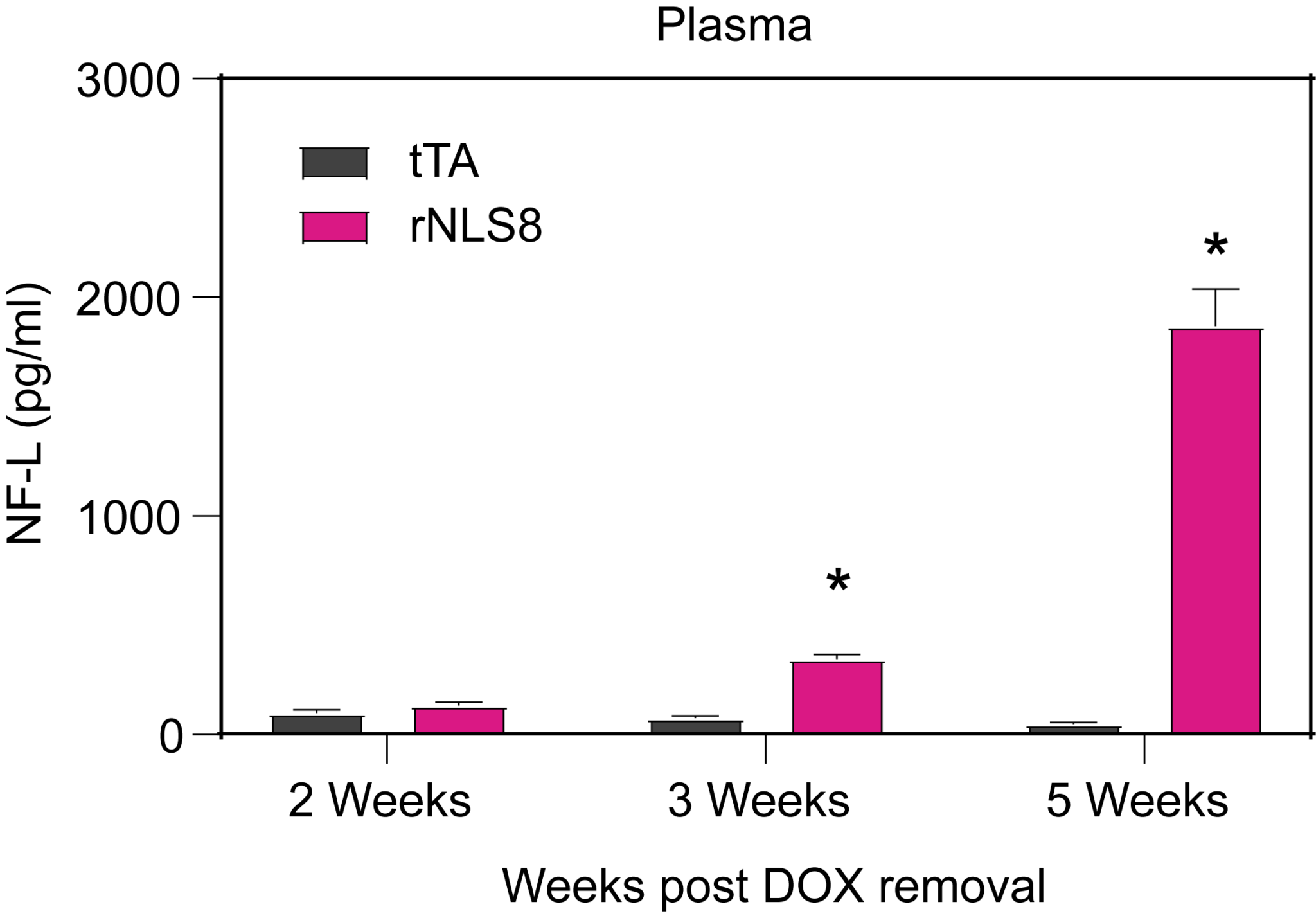
rNLS8 mice show age-dependent elevation of plasma NF-L levels following cessation of DOX treatment.
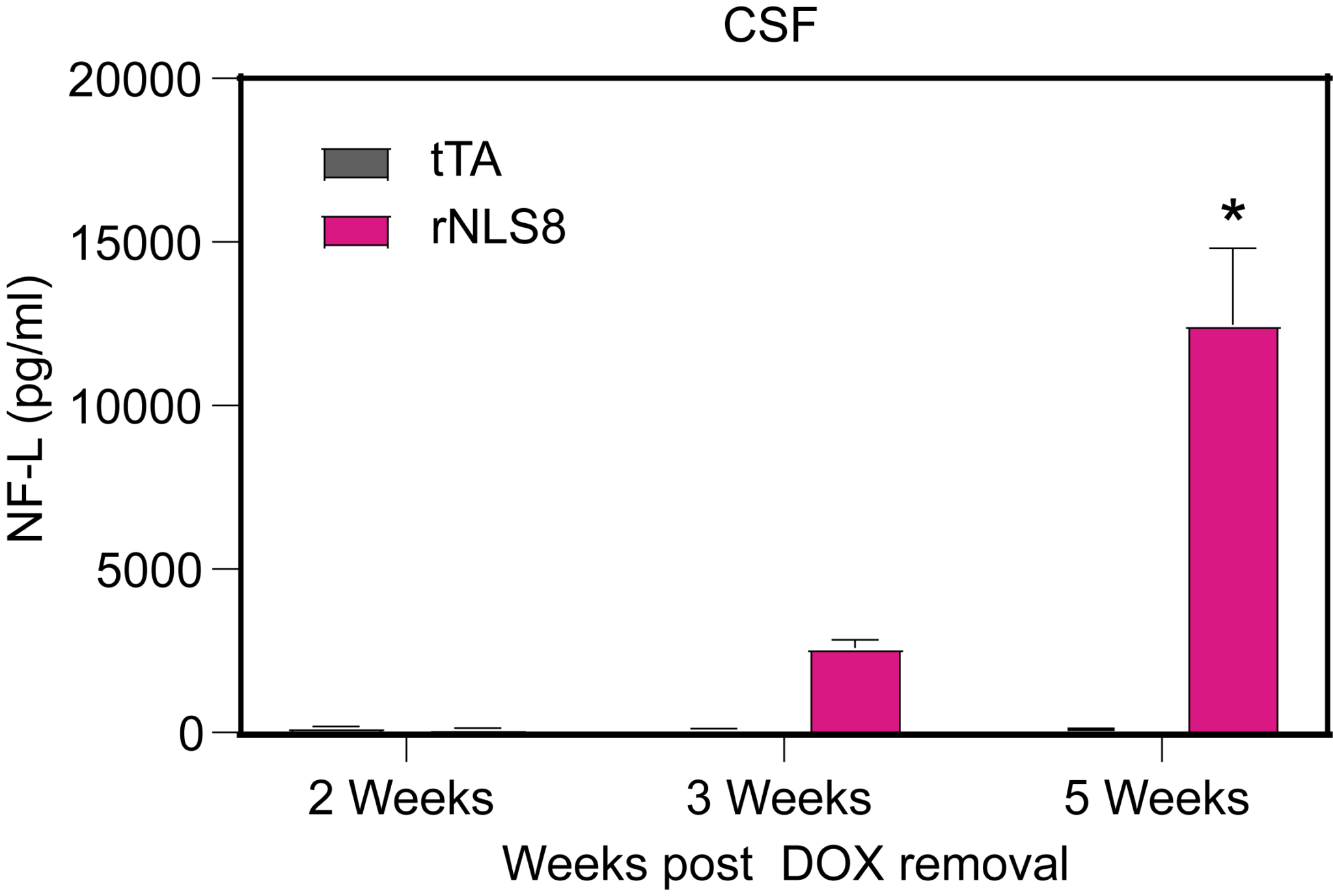
rNLS8 mice show age-dependent elevated CSF NF-L levels following cessation of DOX treatment.
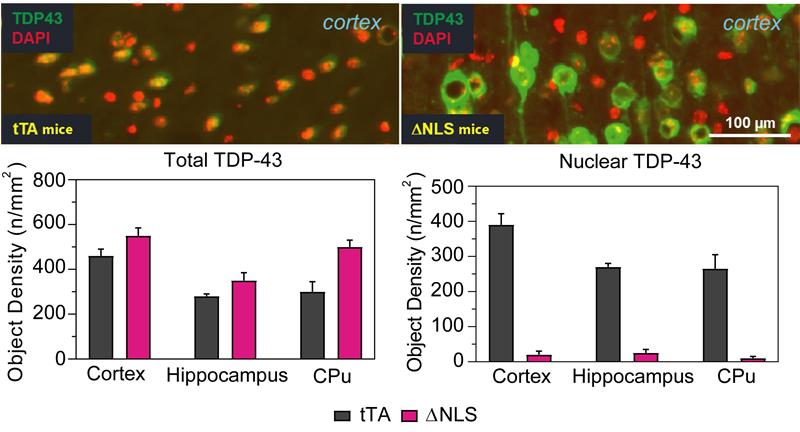
Subcellular Distribution