
Amygdala-Induced Kindling for Preclinical Research

Services
Services
Amygdala-Induced Kindling
The amygdala-induced kindling model in rats is a classic and widely used model for studying chronic epilepsy and epileptogenesis. This model primarily mimics focal-to-bilateral tonic-clonic seizures, especially those associated with temporal lobe epilepsy. Amygdala kindling involves repeated, subconvulsive electrical stimulation of the amygdala, eventually leading to the development of epilepsy and can be used to screen antiseizure therapeutics.
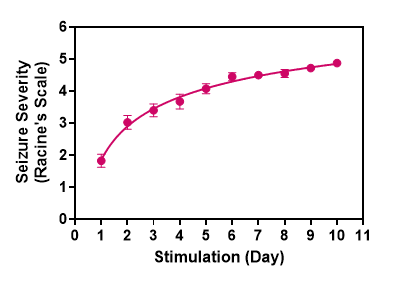
Seizure severity (Racine’s scale) increases progressively with repeated stimulations. The average seizure reaches above stage 4 on day 5 of amygdala kindling in rats.
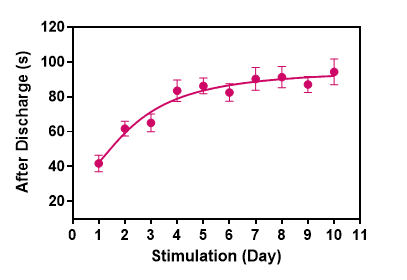
The duration of EEG after discharge increases as the seizure severity progresses. After 7 to 9 days of kindling stimulation, the after-discharge duration reaches a plateau.


Services
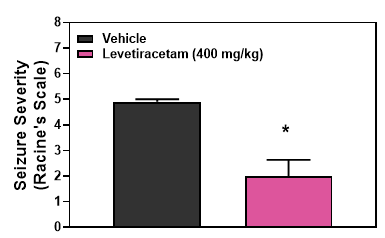
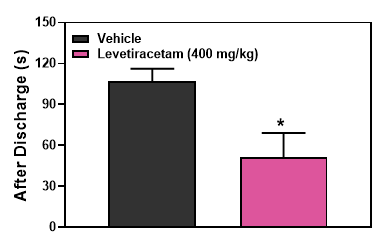
Raw EEG recording of amygdala-kindled rat treated with (A) vehicle or (B) Levetiracetam (300 mg/kg; ip). Arrows indicate where the stimulation is given. The seizure severity (C) and after-discharge duration (D) of amygdala-kindled rats were significantly reduced by Levetiracetam